The Global Growth Opportunity
2026 is shaping up to be a transformative year for entrepreneurial expansion beyond borders. With approximately 594 million entrepreneurs operating worldwide and the global startup ecosystem experiencing an average annual growth rate of 21%, the momentum toward international markets has never been stronger.
According to the Global Entrepreneurship Monitor, 51% of the 79 economies participating in research between 2001 and 2023 have shown significant increases in early-stage entrepreneurship. Perhaps most telling: 75% of entrepreneurs already conduct business with international markets, and 13% are actively planning to expand into additional markets in the near future.
The drivers are clear. Cross-border e-commerce sales are projected to reach $7.9 trillion by 2030, and the World Bank projects modest global growth of 2.7% for 2025-2026, creating pockets of opportunity for entrepreneurs who can move quickly and strategically into emerging markets.
Yet despite this unprecedented access to global markets, one fundamental barrier remains stubbornly persistent: language.
The Problem: Document Translation Is Expensive and Time-Consuming
Language barriers represent one of the most persistent challenges in international business expansion. According to a Forbes Insights report, miscommunication due to language differences can have a direct impact on profitability and expansion potential.
The stakes are high. An Economist Intelligence Unit study found that 44% of respondents said miscommunication caused delays or outright failure to complete projects. Even more concerning: 18% reported that miscommunication led to lost sales, with nearly a third of these valued between $100,000 and $999,999.
Why do document translation costs hurt entrepreneurs most?
- Hiring isn't scalable.
Engaging a localization team or freelance translator for every proposal, contract, sales deck, or compliance document quickly becomes prohibitively expensive. For lean startups and growing businesses, dedicating thousands of dollars per document simply isn't sustainable when you're translating materials into multiple languages for different markets.
- Speed kills deals.
International opportunities move fast. When a potential partner in Tokyo needs your contract translated by tomorrow, or a distributor in São Paulo requires product documentation in Portuguese, waiting days or weeks for professional translation means losing the deal to faster competitors.
- Quality inconsistency.
Different translators approach the same source material differently, leading to inconsistent terminology across your brand's global presence. This creates confusion for customers and partners who encounter varying translations of the same product names, features, or policies.
- AI tools risk costly errors.
Many entrepreneurs turn to free AI translation tools like Google Translate or DeepL to solve these problems. While these engines are fast and convenient, relying on a single AI engine creates significant risks. Each engine has blind spots—places where it misinterprets context, drops critical terms, or introduces awkward phrasing that undermines your professional image.
For legal documents, contracts, or compliance materials, these errors can have serious consequences. A single mistranslated clause in a partnership agreement could create legal liability. An incorrectly translated product warning might expose you to regulatory penalties in a new market.
What about the "compare multiple engines manually" approach?
Some savvy entrepreneurs have adopted a workaround: running their documents through multiple AI engines (Google Translate, DeepL, ChatGPT) and manually comparing the outputs to choose the best translation. While this approach reduces risk, it creates its own problems:
- You're spending hours comparing three to five different versions of the same document
- You need language expertise to judge which translation is actually better
- You're making subjective decisions about which engine to trust for each sentence
- The process becomes exponentially more time-consuming with longer documents
For a 10-page contract, this manual comparison process might take 2-3 hours of focused work. Scale that across multiple documents and languages, and you're back to the scalability problem.
The Solution: SMART AI Document Translation
Enter SMART, a groundbreaking feature from MachineTranslation.com, one of the most accurate AI translation tools on the market, that fundamentally changes how entrepreneurs approach document translation.
How SMART works: Consensus-driven translation
Rather than forcing you to choose one AI engine or manually compare multiple outputs, SMART takes a radically different approach: it automatically runs your document through multiple leading AI translation engines simultaneously, then analyzes the results to identify where these independent systems agree.
As Rachelle Garcia, AI Lead at Tomedes, explains: "When you see independent AI systems lining up behind the same segments, you get one outcome that's genuinely dependable. It turns the old routine of 'compare every candidate output manually' into simply 'scan what actually matters.'"
The process works sentence by sentence. For each sentence in your document, SMART evaluates translations from engines like Google, DeepL, ChatGPT, Claude, and Microsoft Translator. When multiple engines converge on the same translation, SMART selects that consensus option. The result: one production-ready translation that represents the collective intelligence of multiple AI systems.
Crucially, SMART doesn't add any additional paraphrasing or "polishing" layer on top. It simply identifies and delivers the translation that the majority of engines support, giving you the most defensible, reliable result without introducing new variables.
The data behind consensus translation
Internal testing at MachineTranslation.com on mixed business and legal material revealed that consensus-driven selections reduced visible AI errors and stylistic drift by approximately 18-22% compared to relying on a single engine.
The largest improvements came in three critical areas:
Fewer hallucinated facts:
When one AI engine invents information that wasn't in the source text, the others typically don't make the same mistake. SMART follows the majority view, not the outlier.
Tighter terminology:
Multiple engines converging on the same technical term or industry phrase provides much stronger confidence that the translation is accurate and appropriate.
Fewer dropped words:
Single-engine translations occasionally omit words or phrases, especially in complex sentences. Consensus translation catches these gaps.
Perhaps most telling: in a focused review where professional linguists rated SMART output, 9 out of 10 described it as the safest entry point for stakeholders who don't speak the target language at all.
Why does consensus translation matter for entrepreneurs?
Confidence for non-speakers
Most entrepreneurs expanding internationally don't speak every language in their target markets. When you're reviewing a Spanish translation of your English contract, and you don't speak Spanish, how do you know if it's accurate?
With traditional single-engine translation, you're essentially hoping for the best. With SMART's consensus approach, you have the assurance that multiple independent AI systems agreed on this translation, dramatically reducing the probability of serious errors.
Speed without compromise
SMART delivers consensus translations in seconds. There's no multi-day wait for professional translators, but also no need to spend hours manually comparing engine outputs yourself. The result: you can respond to international opportunities at the speed of business without accepting unacceptable quality risks.
Scalability across documents
Whether you need to translate one contract or 50 product descriptions, SMART handles it with the same level of quality assurance. The consensus mechanism works equally well for a single page or a complex 100-page compliance manual.
This scalability is particularly valuable for entrepreneurs in the midst of rapid international expansion. As research shows, internationally-minded entrepreneurs often conduct business across multiple markets simultaneously, creating ongoing translation needs across contracts, marketing materials, product documentation, and customer communications.
Reduced editing burden
When you receive a SMART consensus translation, you're not starting from scratch. Professional linguists can focus their review time on the most sensitive clauses, industry-specific terminology, or nuanced phrasing that requires human judgment, rather than correcting basic translation errors that consensus translation has already eliminated.
This hybrid approach, automated consensus translation followed by strategic human review where needed, offers the best of both worlds: speed and cost-effectiveness of AI with the quality assurance of human expertise where it matters most.
How are entrepreneurs using SMART for document translation?
Contracts and partnership agreements
For legal documents, accuracy isn't optional. A mistranslated clause in a distribution agreement or supplier contract can create significant liability. SMART's consensus approach provides the foundational accuracy entrepreneurs need, with the option to add human verification from professional linguists for the most critical terms.
This allows lean teams to move quickly on international partnerships while maintaining appropriate risk management. Instead of paying $500-1000 for rush translation of every contract iteration, entrepreneurs can use SMART for initial drafts and negotiations, then invest in professional review for the final agreement.
Product pages and marketing materials
Consistency matters in brand communication. When the same product appears on your website in English, Spanish, and Japanese, customers expect consistent terminology and messaging.
SMART's consensus mechanism naturally promotes consistency, when multiple AI engines agree on how to translate your product names, feature descriptions, and benefits, you're more likely to get stable, repeatable translations across your entire product catalog.
Compliance documentation and regulatory filings
Many markets require businesses to submit documentation in local languages for regulatory compliance. These filings often contain standardized language, technical specifications, and formal declarations where accuracy is critical but creativity isn't required.
SMART excels in these scenarios. The consensus approach identifies the most broadly supported translation of technical and formal language, providing a reliable foundation for regulatory submissions. For critical filings, entrepreneurs can layer human verification on top of SMART's output for maximum assurance.
Internal communications and operations manuals
As your international team grows, you need translated versions of operations manuals, training materials, and internal policies. These documents are important but may not justify the expense of professional translation for every update.
SMART enables you to keep international teams aligned with translated documentation at a fraction of the cost of traditional translation services, while maintaining quality standards that ensure your team understands critical procedures and policies.
What does AI translation look like in 2026?
The broader landscape of AI translation in 2026 continues to evolve rapidly. According to Slator, major platforms like Reddit have successfully deployed AI-powered translation to more than 35 countries, with Reddit's CEO describing machine translation as "one of the best opportunities we've ever seen to rapidly grow the content base outside of English."
Meanwhile, the global language solutions market represents an addressable $31.7 billion market in 2025, covering translation, dubbing, multilingual content, and technology.
For entrepreneurs, this means several important trends:
Domain-specific AI models are emerging. Generic translation engines are being supplemented by specialized models trained on legal, medical, technical, and financial terminology, improving accuracy in specialized industries.
Real-time translation is becoming mainstream. Beyond text, speech, and video translation technologies are rapidly improving, enabling live multilingual meetings and customer support.
Translation quality is approaching human parity in many language pairs and document types. Research shows that modern AI translation can deliver 80-85% of professional translator quality for many common business documents.
But these advances also highlight why consensus translation matters more, not less. As AI translation becomes more capable, the differences between engines become more subtle and harder to detect without expertise. SMART's consensus mechanism provides a systematic way to leverage the collective intelligence of these increasingly sophisticated systems.
Getting started with SMART translation
MachineTranslation.com offers SMART translation with a generous free tier that provides up to 100,000 words per month, enough for most small to medium businesses to translate substantial volumes of content.
The platform supports 270+ languages and can handle various file formats including PDF, DOCX, and CSV, preserving formatting so your translated documents are ready to use immediately.
For entrepreneurs ready to scale internationally, SMART translation represents a fundamental shift: from hoping your translation is accurate to knowing that it represents the consensus judgment of multiple leading AI systems.
What makes 2026 different: The AI translation moment
Several converging factors make 2026 a unique moment for AI-powered international expansion:
- AI translation has crossed the threshold of reliability.
Improvements in neural machine translation over the past two years have brought AI translation quality to the point where it's genuinely dependable for most business documents.
- International opportunities are accelerating.
The projected 2.7% global economic growth masks significant regional variation, with emerging markets offering substantial opportunities for entrepreneurs who can move quickly.
- Competition is intensifying.
As more entrepreneurs recognize these opportunities, first-mover advantage matters. The ability to translate documents quickly and accurately creates a competitive advantage in international deal-making.
- Remote work enables global teams.
The normalization of remote work means entrepreneurs can build truly international teams, but this requires translated operations manuals, policies, and training materials.
The entrepreneurs who thrive in this environment will be those who can move quickly across language barriers without sacrificing quality. SMART translation is built precisely for this moment.
The bottom line for entrepreneurs
Language barriers have historically limited international expansion to larger companies with dedicated localization budgets. That era is ending.
Consensus AI translation through SMART provides entrepreneurs with access to production-ready translations that represent the collective intelligence of multiple leading AI systems, at a fraction of the cost and time of traditional translation services.
This doesn't mean AI translation replaces human translators. Rather, it shifts where human expertise adds the most value: from basic translation to strategic transcreation, cultural adaptation, and legal verification of the most critical documents.
For entrepreneurs expanding internationally in 2026, the question isn't whether to use AI translation, it's how to use it strategically. SMART's consensus approach offers a systematic answer: leverage multiple AI engines simultaneously to identify translations where independent systems agree, giving you the confidence to move quickly while managing risk appropriately.
The 75% of entrepreneurs already conducting international business are navigating these challenges right now. SMART translation gives them a better tool for one of international expansion's most persistent obstacles.
As the language services market continues its rapid evolution, one thing is clear: entrepreneurs who master scalable, reliable document translation will have a significant advantage in capturing international opportunities. In 2026, that means embracing consensus AI translation as a core capability, not a nice-to-have, but a fundamental requirement for competing globally.
Looking to scale your business internationally? The Entourage helps entrepreneurs build the systems, strategies, and confidence needed for sustainable growth. With business coaching from experts who've helped businesses expand across Europe, Asia, and Australia, you'll get the roadmap you need to elevate your business to the next level.
Related Categories

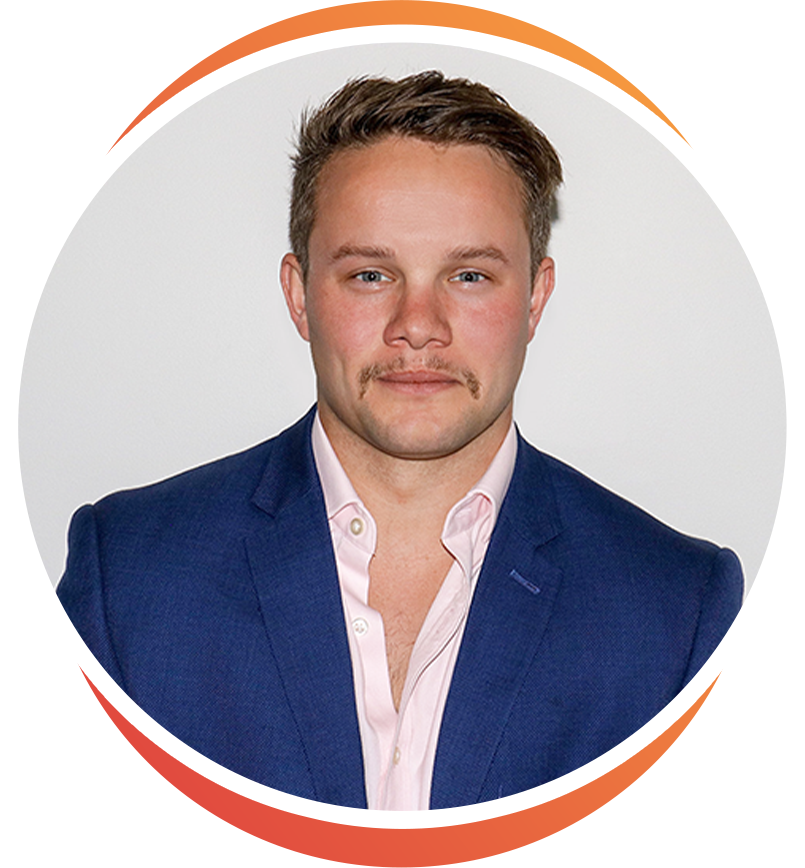
Ryan Terrey
As Director of Marketing at The Entourage, Ryan Terrey is primarily focused on driving growth for companies through lead generation strategies. With a strong background in SEO/SEM, PPC and CRO from working in Sympli and InfoTrack, Ryan not only helps The Entourage brand grow and reach our target audience through campaigns that are creative, insightful and analytically driven, but also that of our 6, 7 and 8 figure members' audiences too.