Minimizing Business Risk with an Effective Operations Setup: How It's Done, Australian Entrepreneur Style
Every businessman knows risk on some level. You've assessed market risks, financial risks, and competitive risks. But there's another category that often flies under the radar until something goes wrong: operational risk. The kind that comes from how you've set up your warehouse, organized your inventory, and structured your day-to-day workflows.
An effective operations setup is a lot more than having the right equipment or the latest technology. It's about making thought-filled decisions that protect your assets, safeguard your team, and create an environment where productivity flows organically, instead of being continuously impeded by inefficiencies and hazards. To Australian entrepreneurs who manufacture and manage physical products, these decisions have a direct impact on your bottom line and your ability to scale sustainably.
Companies that grow steadily and profitably do not always have the biggest budgets. They are the ones that recognise operational efficiency as a strategic priority and make smart investments that reduce risk while improving performance.
Operations Common Risks from Poor Operations
Enter any underperforming warehouse or storage facility, and the same patterns keep replaying themselves. Inventory stacked haphazardly, creating safety hazards and a higher risk of product damage; staff navigating through cluttered spaces, losing time trying to find items and increasing the chances of workplace injuries; products scratched, dented, or broken simply because they weren't stored properly.
These are not minor inconveniences; they are active threats to your business that compound over time. Damaged inventory directly hits your revenue-you cannot sell damaged goods, and their replacement eats into already tight margins. Workplace injuries are an obvious cause of workers' compensation and lost productivity but also damage team morale and build a culture of undervaluing and unsafety.
Wasted time might be the most insidious risk of all, as it's harder to measure. When staff spend fifteen minutes searching for a product that should be immediately accessible, that time disappears without obvious fanfare. Multiply that across dozens of retrievals daily, and you're looking at hours of lost productivity each week. That is hours that could be spent serving customers, processing orders, or working on growth initiatives.
Poor operational setups also hinder your ability to scale. As volumes of orders ramp up, inefficiencies that were manageable at smaller scales become critical bottlenecks. You end up throwing more labour at problems that a better organisation could solve, increasing costs without proportionally increasing output.
These operational failures from a coaching perspective are often the result of making set-up decisions after major strategic priorities. Businesses focus on sales and marketing, getting customer promises, but don't attend to building the infrastructure that actually will deliver on those promises.
Full Operations Setup Introduction
The collaboration and communication that exist among core partners are modeled by the notion of supply chains. Issues associated with these collaborations are best overcome through mutual cooperation. Essentially, every problem facing one partner impacts the performance of the other partners.
Building operational efficiency is about recognizing small, thoughtful investments in how you organize and protect your inventory at the start deliver outsized returns over time. The goal isn't perfection on day one; it's to make systems that support safe, efficient workflows while protecting your assets.
Storage organisation forms the foundation of operational efficiency. When inventory is organised logically and stored securely, everything downstream becomes easier. The staff is able to find the products fast and with confidence. Products stay protected from damage during storage and handling. The workflows glide more seamlessly because the physical environment supports productivity rather than hinders it.
The purpose-designed storage solutions overcome all these issues in a very structured manner. Stillage, for example, involves fully organised, safe, and efficient storage that protects inventories while supporting workflows with ease. They are specially designed to meet all the demands of warehouses and storage areas, offering strength and functionality that general-purpose storage solutions just cannot provide.
Similarly, securing products properly during storage and transit is another fundamental aspect of risk reduction. Whether you're moving inventory between facilities or preparing goods for dispatch, inconsistent or inadequate securing methods create unnecessary exposure to damage. Specific strapping solutions for industry offer tailored approaches that ensure products remain secure throughout handling, reducing the likelihood of costly damage or safety incidents.
For those businesses involved in different kinds of inventory-from small components to larger items-Australian companies should have efficient storage that works to meet various needs, from storage solutions to organization. This is one of those instances where the right systems create flexibility without giving up structure, enabling a business to easily adjust as its mix of inventory evolves.
These solutions do not require heavy capital investment or a complete overhaul of the operations. Focus on the highest-risk or highest-volume areas first. Where is the inventory most likely to be damaged? Where do the staff spend the most time trying to find products? Where have workplace incidents or near-misses taken place? Those are your first priority areas to improve.
Assessment of Regular Operations: A Coaching Exercise
Here's a coaching exercise worth doing quarterly: walk through your operations with fresh eyes and ask yourself hard questions. Does my operations setup protect my assets, reduce risk, and allow my team to work safely and efficiently? Be honest about the gaps you identify.
Look at how inventory moves through your facility. Are there unnecessary touchpoints where products get handled several times? Are there any bottlenecks where work is consistently backed up? Are staff improvising workarounds because the official process doesn't actually work?
Pay attention to your team's feedback: the people who work in your warehouse or storage facility day in and day out understand better than anyone the pain points of operations. They know what processes waste time, which storage areas create problems, and where safety concerns exist. Creating channels for that feedback, and then actually acting on it, proves you value their input while simultaneously improving operations.
Now consider the true cost of your current setup. That inventory damage you are writing off monthly-how much would it cost to prevent? Those workplace injuries-what is the real impact including lost productivity, replacement costs, and the effect on team morale? The time wasted on inefficient processes-what could your team accomplish if that time was freed up?
Small, thoughtful investments in equipment and layout continue to pay off time after time with returns that far outweigh the initial investment. An improved storage system may be a few thousand dollars worth of investment, but if it reduces damages by even a small percent, improves productivity because staff is not wasting time, and provides a safer workplace, the ROI should be measured in months, not years.
The common frame of mind among entrepreneurs who are reaping the best results from such improvements is: they do not consider operational infrastructure as a mere necessary evil, but rather as a strategic asset. They realize that effective operations are not about costs, but about creating the foundation upon which sustainable growth will take place.
Building Operational Resilience
An effective operations setup acts like proactive business coaching to the entire organisation. It builds mechanisms and frameworks that direct and constrain behaviour, limiting mistakes and setting standards that endure even when your staff changes or your volume fluctuates.
Because proper storage solutions, such as stillage systems, are not just about the equipment; they offer a standard as to how inventory should be handled and stored. They provide a visual organization that enables staff to work effectively with no need for constant supervision. You build in safety measures that protect your team even in the most hectic moments when attention gets divided.
These investments have benefits that can be measured over multiple dimensions. Safety improvements reduced workers' compensation costs but, more importantly, provided a workplace where people felt valued and protected. Workflow efficiency translated directly into higher productivity and faster order fulfilment. Better inventory protection reduced waste and ensured customers received products in perfect condition.
The ones that will grow sustainably are those that recognize operational efficiency as foundational to everything else they're trying to achieve. You can have the best sales team, the most innovative products, and the sharpest marketing, but if your operations can't deliver quality products safely and efficiently time after time, then growth becomes unsustainable. Start with an honest assessment of where operational risks exist in your business today. Pinpoint those areas where inefficiency, safety, or inventory damage is costing you time and money. Then, make targeted investments that address specific challenges. The Australian business environment rewards those companies that meld entrepreneurial drive with operational excellence.
The exciting thing about operational improvements is that they are totally within your control. You do not have to wait for market conditions to change or customers to behave differently; you simply have to make some thoughtful decisions about how you set up and run your operations. That's business coaching in its most practical form: spotting where your systems are creating either risk or inefficiency; implementing targeted solutions; and continually refining your approach based on results. Your operations setup either supports your growth ambitions or constrains them. Which one it is depends entirely on the decisions you make today.
Related Categories
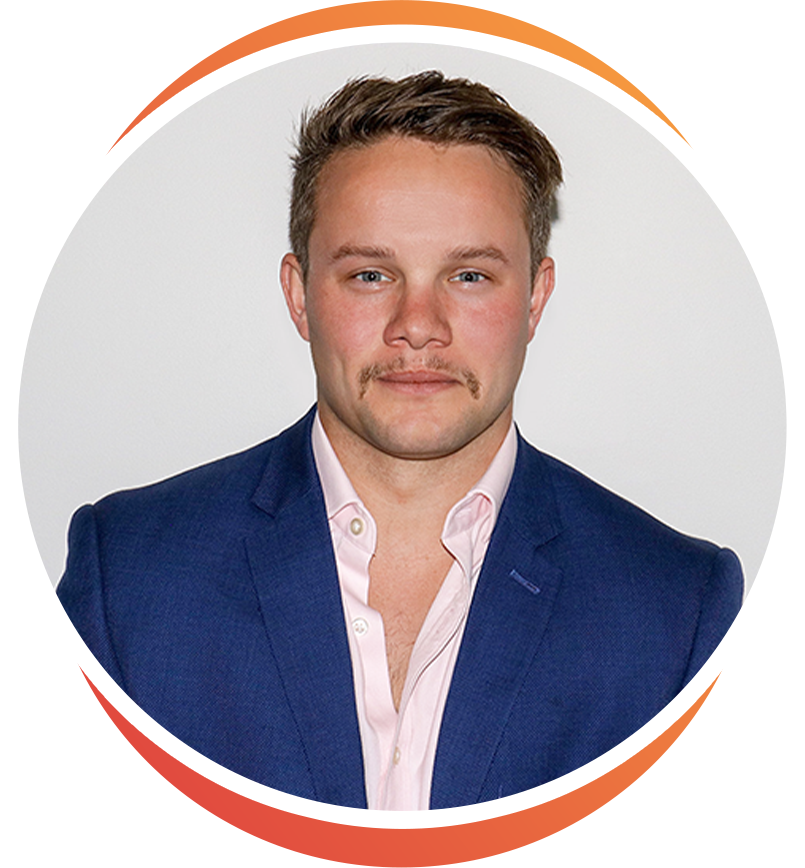
Ryan Terrey
As Director of Marketing at The Entourage, Ryan Terrey is primarily focused on driving growth for companies through lead generation strategies. With a strong background in SEO/SEM, PPC and CRO from working in Sympli and InfoTrack, Ryan not only helps The Entourage brand grow and reach our target audience through campaigns that are creative, insightful and analytically driven, but also that of our 6, 7 and 8 figure members' audiences too.