Nobody prepares you for the moment your most important client calls at the same time your child wakes up with a fever and cannot go to school. Or the week a key hire resigns, your partner is travelling for work, and the car needs urgent repairs. These are not edge cases in the life of a founder. They are Tuesday.
Running a business is relentless enough on its own. Doing it while managing a household, raising children, and staying present in the relationships that matter requires a different kind of operating system than the one most entrepreneurship content talks about. The founders who sustain high performance over the long term are not the ones who have eliminated life's interruptions. They are the ones who have built the systems, habits, and mindset to absorb them without losing momentum.
Here is how the best of them do it.
They Treat Personal Systems With the Same Rigour as Business Systems
Most founders invest heavily in building systems for their business. Processes, SOPs, delegation frameworks, project management tools. They apply rigour and iteration to every operational challenge the business throws at them.
The same founders often manage their personal lives reactively, dealing with each disruption as it arrives without any underlying structure to absorb the impact. The result is a life that feels chaotic outside of work, which eventually bleeds into work regardless of how good the business systems are.
High-performing founders apply the same systems thinking to home and family that they apply to their business. They plan for the predictable demands of family life the same way they plan for quarterly business milestones. School schedules, medical appointments, childcare logistics, and household management all get the same intentional attention as their operational priorities.
This does not mean rigidity. It means having a baseline structure that makes room for the unexpected rather than having the unexpected consume everything because there was no structure to begin with.
They Build a Support Infrastructure Before They Need It
The worst time to find a reliable babysitter is the morning your child is sick and you have a board meeting. The worst time to research an urgent family service is when you are already in the middle of a crisis that requires it.
Founders who manage family life well do the preparation work in advance. They have a trusted network of childcare options, a family doctor they can reach quickly, and a clear understanding of what services exist to handle common family disruptions efficiently.
One of the most practically useful things a founder with school-age children can know about is how to handle the administrative requirements when a child is unwell. Schools require medical documentation for absences, and getting that documentation has traditionally meant navigating GP waiting times that do not respect your calendar. The emergence of digital health services that provide same-day medical certificates for students has changed that completely. A certificate can now be obtained by completing a straightforward online form without a phone or video consultation, which means one less logistical problem to solve on an already disrupted day. Knowing this exists before you need it is the kind of preparation that keeps a minor family disruption from becoming a half-day productivity loss.
They Protect Their Energy, Not Just Their Time
Time management gets most of the attention in productivity conversations, but energy management is what actually determines output quality. A founder who has twelve hours available but is running on poor sleep, unresolved stress, and no recovery time will produce worse outcomes than one who has eight focused hours in a strong physical and mental state.
High-performing founders are deliberate about the inputs that protect their energy. Consistent sleep, regular physical movement, and some form of daily decompression are not lifestyle luxuries for these people. They are operational requirements that protect the cognitive capacity on which their business depends on.
When family life creates pressure, it is often the recovery habits that get sacrificed first. The morning run gets skipped. Sleep gets shortened to catch up on work. The downstream effect on decision quality, emotional regulation, and creative thinking is real and measurable, even if it is not immediately obvious.
Building recovery habits that are resilient enough to survive busy weeks is one of the distinguishing characteristics of founders who sustain performance across years rather than cycling through burnout and recovery.
They Have Honest Conversations With Their Partners
The logistics of running a household alongside a demanding business require ongoing negotiation between partners. The founders who manage this well do not assume the arrangement is understood. They talk about it explicitly, revisit it regularly, and treat it as a genuine operational challenge that deserves the same clear communication they bring to their business relationships.
This means being honest about what the business actually demands in terms of time and energy, what the family actually needs at different stages, and how the load can be distributed in a way that is sustainable for both people. The conversations that do not happen become the resentments that undermine both the relationship and the business over time.
Founders who model good communication at home also tend to be better communicators in their businesses. The skills transfer in both directions.
They Have Learned to Delegate at Home as Well as at Work
The hardest lesson many founders learn is that delegation is not a business skill. It is a life skill. The same reluctance to let go that keeps founders doing tasks their team should handle also keeps them managing every household and parenting responsibility personally when much of it could be effectively delegated or outsourced.
Grocery delivery, household maintenance services, school run arrangements, and administrative tasks that consume time without requiring the founder's specific involvement are all candidates for delegation. The return on time freed from these activities, when that time goes back into the business or into genuinely restorative family engagement, consistently outweighs the cost.
The founders who are most present with their families are almost always those who have been most ruthless about eliminating the low-value activities that consume time without creating connection.
They Have Made Peace With Imperfection
The final and perhaps most important quality that separates high-performing founders from those who burn out trying to do everything perfectly is acceptance of imperfection. The business will have difficult weeks. The family will have difficult weeks. Sometimes both happen simultaneously.
The goal is not a life in which everything runs perfectly. It is a life in which the systems are resilient enough to handle disruption without catastrophic failure, the relationships are strong enough to weather difficult periods, and the founder is self-aware enough to know when to push and when to recover.
That operating system does not come from a single productivity framework or a morning routine. It comes from years of honest reflection, deliberate adjustment, and the willingness to treat both the business and the people who matter to you with the same quality of attention and care.
That is what high performance actually looks like over the long term.
Related Categories
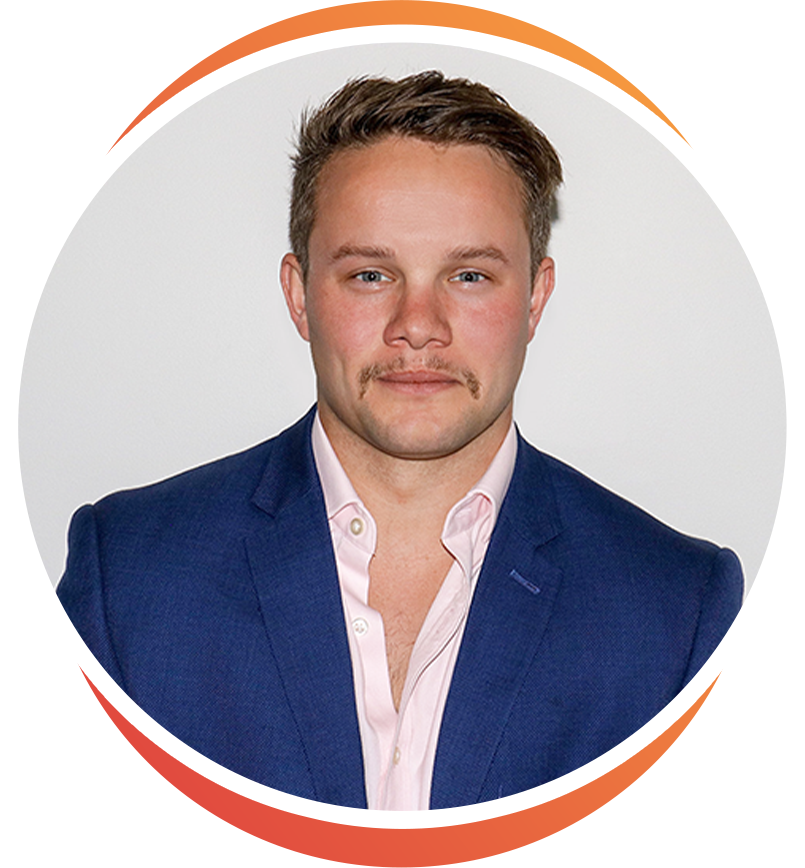
Ryan Terrey
As Director of Marketing at The Entourage, Ryan Terrey is primarily focused on driving growth for companies through lead generation strategies. With a strong background in SEO/SEM, PPC and CRO from working in Sympli and InfoTrack, Ryan not only helps The Entourage brand grow and reach our target audience through campaigns that are creative, insightful and analytically driven, but also that of our 6, 7 and 8 figure members' audiences too.