Ask ten entrepreneurs what success looks like and you will get ten different answers. A number. An exit. A product that reaches a certain scale. A name that means something in the industry. These are not wrong answers, but they are incomplete ones.
The founders who are still standing twenty years in, with businesses that have genuinely mattered, tend to define success differently. Not because they are less ambitious, but because their ambition is pointed at something bigger than a valuation.
They Redefine What Winning Actually Means
Early in a founder's journey, winning looks like survival. Then it looks like growth. Then funding. Then revenue milestones. The goalposts keep moving, which is fine, but the ones who end up doing meaningful work eventually stop letting external benchmarks do all the defining.
Long-term success for a purpose-led founder is not the absence of financial goals. It is having a framework for success that does not collapse if the numbers have a bad quarter. It includes things like: are we still serving the people we set out to serve? Has the quality of what we deliver held up as we have grown? Do the people who work here feel like the mission is real?
Those questions sound soft until you realize how many companies fall apart because nobody was asking them.
They Stay Connected to the Problem They Started With
One of the quieter risks of building a successful company is distance. The founder who once sat directly across from customers, who felt the problem in an immediate and personal way, gradually gets insulated from it. More layers of management, more time in board meetings, less time in the actual work.
The purpose-led founders who sustain long-term impact find ways to fight that distance deliberately. They stay in regular contact with customers. They do not outsource their understanding of the problem to data alone. They remember why they started, not as a motivational exercise, but as a practical anchor for the decisions they still have to make every day.
They Understand That Longevity Requires Adaptation
Staying true to your purpose does not mean staying still. The founders who last are not the ones who found something that worked and refused to change it. They are the ones who held their core mission constant while staying genuinely flexible about how to deliver on it.
This is harder than either extreme. Pivoting away from your purpose the moment things get difficult is one failure mode. Refusing to evolve because you are attached to the original version of the business is another. The long game requires navigating between them, which means being honest about what is essential and what is just familiar.
They Do Not Pretend the Hard Parts Are Not Hard
There is a particular kind of founder content that makes entrepreneurship look like a series of tough moments that turned out to be lessons in disguise. Everything happens for a reason. The struggle made them stronger. Looking back, they would not change a thing.
It is not that this is entirely false. It is that it papers over the reality that some of it was just genuinely hard, costly, and sometimes irreversible. The founders who build long-term credibility, with their teams, their customers, and their industries, tend to be the ones who are honest about that.
They talk about the challenge of scaling without making it sound like a TED talk origin story. They acknowledge what did not work, what it cost, and what they would do differently. That honesty is not weakness. It is what makes people trust them.
The Real Measure Is What You Leave Behind
Ultimately, long-term success for a purpose-led founder is not measured on the day of an exit or when a revenue target gets hit. It is measured in what the business looks like after they step back. Whether the culture held. Whether the mission survived contact with scale. Whether the people who came after them understood what they were building and why.
That kind of legacy does not happen by accident. It is the result of hundreds of decisions made over years.
Related Categories
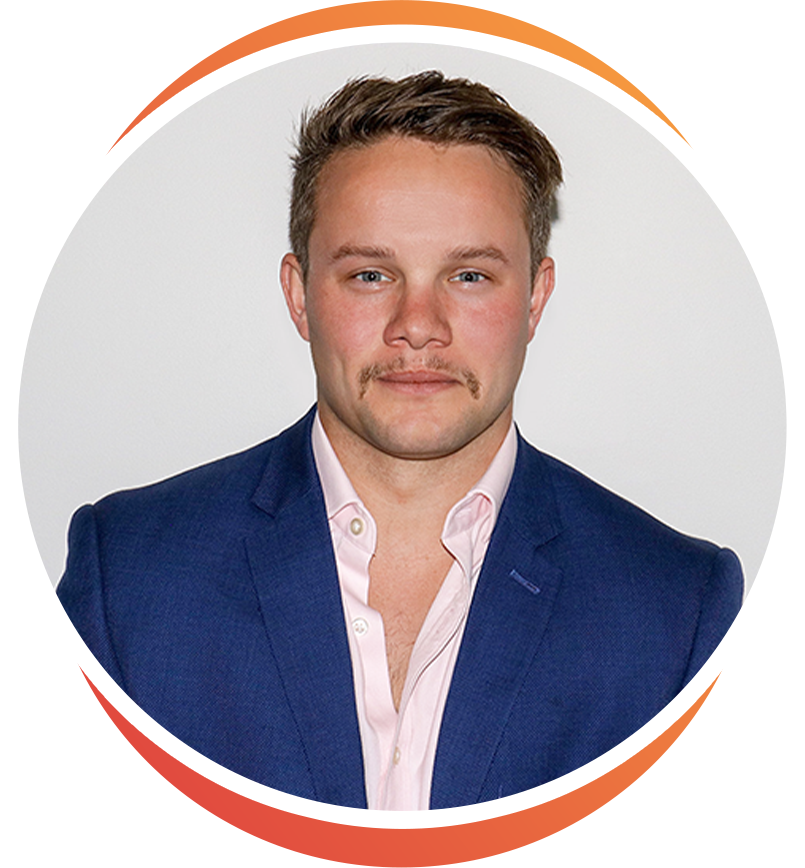
Ryan Terrey
As Director of Marketing at The Entourage, Ryan Terrey is primarily focused on driving growth for companies through lead generation strategies. With a strong background in SEO/SEM, PPC and CRO from working in Sympli and InfoTrack, Ryan not only helps The Entourage brand grow and reach our target audience through campaigns that are creative, insightful and analytically driven, but also that of our 6, 7 and 8 figure members' audiences too.